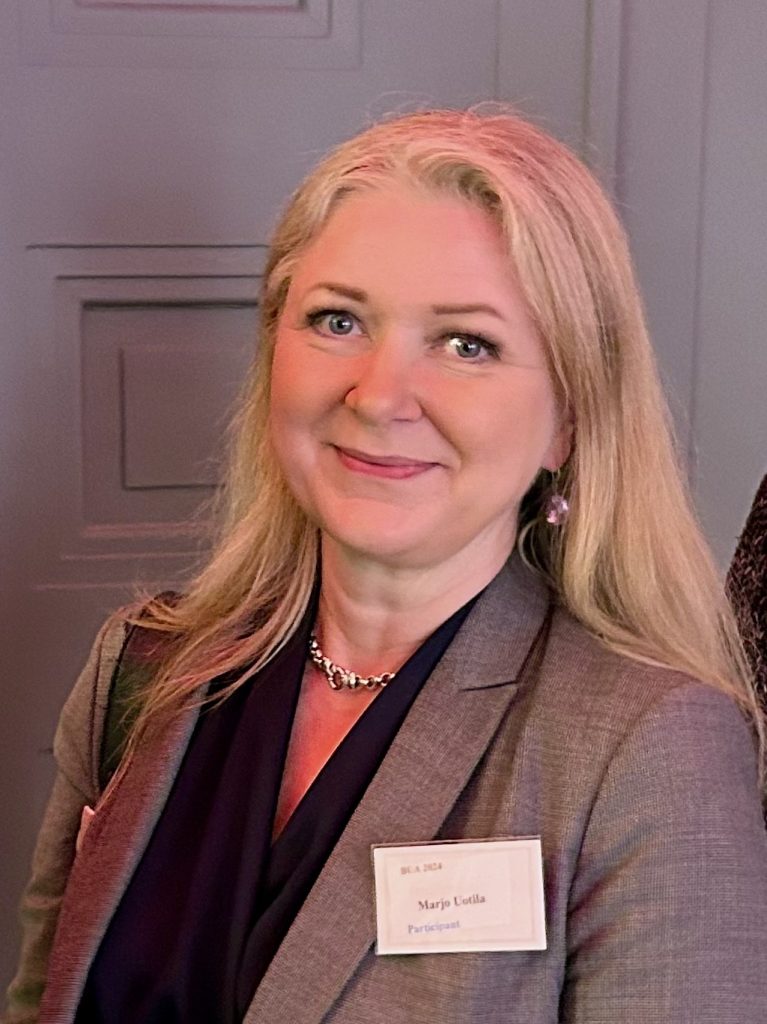
We are pleased to announce the appointment of the new Chair of the INTBAU Council of Chapters, one of the organisation’s governing bodies. Marjo Uotila, Chair of INTBAU Finland and a longstanding advocate for traditional building and a humane built environment in the country, began her term in March 2026.
The appointment coincided with International Women’s Day, widely associated with reflection on the role of women in society — an opportunity to recognise achievements, consider progress made, and acknowledge structural barriers that continue to affect participation in professional and public life. Across disciplines, the month invites institutions and communities alike to consider how broader participation contributes to more resilient, inclusive and meaningful outcomes.
Within the built environment, these questions are particularly relevant. Architecture, urbanism and building crafts influence how people live, interact and understand the places they inhabit. The diversity of voices contributing to these fields therefore shapes not only professional practice, but also the cultural and social quality of everyday environments.
Marjo’s appointment provides a fitting moment to reflect on the growing presence and influence of women across the built environment, and on the importance of ensuring that diverse voices contribute to shaping its future.
When I first began engaging with this field, many of the visible figures, especially internationally, were predominantly men. Over the past decade I have seen a noticeable change — many of the most dynamic initiatives today involve women: architects, historians, planners, craftspeople, and activists who are bringing new perspectives into the conversation. In grassroots movements and chapter activities especially, women are often the organisers, communicators and network builders. They play an essential role in connecting communities, professionals and the public.
…the growing presence of women is not only a matter of representation. It also enriches the way we approach the built environment.
— Marjo Uotila
In conversation with Marjo Uotila — INTBAU’s newly elected Chair of the International Council of Chapters
In this interview, Marjo reflects on her professional journey, the importance of international peer networks, and the value of questioning assumptions about how and why we build:
Organisations like INTBAU can help by creating platforms where people can share knowledge and leadership regardless of hierarchies. The built environment is inherently interdisciplinary. You can approach them through design, planning, craftsmanship, research, history, environmental psychology or community engagement. Seek out networks, No one builds a career alone, and international communities like INTBAU can be incredibly supportive.
Read on for insights into Marjo’s work, experience and outlook as Chair of the International Council of Chapters.
You may also wish to revisit reflections shared by women across the INTBAU Network in International Women’s Day 2025: celebrating women in traditional building, architecture and urbanism.
1. Congratulations on your appointment as Chair of the INTBAU Council of Chapters. What does this role mean to you personally, and what excites you most about leading the global network of Chapters?
For me personally, this role feels like a continuation of a long journey working within international networks around architecture, research and cultural heritage. Throughout my career, I have been drawn to the question of how built environments influence people’s lives, and how we can learn from other countries and disciplines.
What excites me most about INTBAU at this moment is the momentum. The network is growing strongly, and we see new chapters and initiatives emerging in many parts of the world. Educational activities such as summer schools are thriving, bringing together students, architects and craftspeople who want to learn from traditional building cultures while also addressing contemporary challenges.
At the same time, there is a broader shift happening. People are beginning to question the idea of disposable architecture — buildings designed for short lifespans and little cultural meaning. Increasingly, we understand that sustainability must also include beauty, durability and cultural continuity.
2. You have been a longstanding advocate for traditional building, architecture and urbanism in Finland. Could you share a little about your journey in the field and what first drew you to this work?
Like many people, I had grown up hearing certain slogans: that beauty is purely subjective, that architecture must always “reflect its own time”, or that historical forms should not be revisited. However, when I realised that research was not supporting these slogans, I became interested in understanding the phenomena.
I started exploring examples from other countries where new traditional architecture and urbanism were being practised successfully by architects, developers and craftspeople. I also began reading research from fields such as environmental psychology, neuroscience and urban studies about how different environments affect people’s wellbeing.
What struck me was that there is a growing body of evidence showing that certain qualities — human scale, richness of detail, natural materials and coherent urban fabric — consistently support human wellbeing. At the same time, these are exactly the qualities people tend to love in historic places. That discovery motivated me to start writing, speaking and sharing examples that show we can build beautiful and humane environments today as well.
3. Throughout your career, have you observed changes in the role and visibility of women in traditional building, architecture and urbanism, either in Finland or internationally?
Yes, definitely. When I first began engaging with this field, many of the visible figures, especially internationally, were predominantly men, particularly among architects and theorists associated with traditional architecture.
Over the past decade, I have seen a noticeable change. Many of the most dynamic initiatives today involve women: architects, historians, planners, craftspeople and activists who are bringing new perspectives into the conversation.
In grassroots movements and chapter activities especially, women are often the organisers, communicators and network builders. They play an essential role in connecting communities, professionals and the public.
4. What challenges have you seen that women still face in the built environment field, particularly in leadership or technical roles, and how do you think organisations like INTBAU can help address them?
Some challenges are structural and familiar across many professions: visibility, representation in leadership roles, and recognition of expertise.
In fields connected to construction and technical work, there can also still be cultural barriers that make it harder for new voices to be heard.
Organisations like INTBAU can help by creating platforms where people can share knowledge and leadership regardless of hierarchies. Chapters often bring together architects, craftspeople, historians, students and citizens. That diversity allows talent and commitment to become visible in ways that more formal institutions sometimes struggle with.
Mentorship, collaboration and international networking are also extremely important.
5. INTBAU is a global network with representation across many cultural contexts. How important is international collaboration and peer support in strengthening opportunities for women in the built environment?
It is extremely important.
International networks provide role models, colleagues and examples that broaden your sense of what is possible. Seeing women leading projects or chapters in different countries can be very encouraging. It also creates peer support — you realise you are part of a wider community.
That sense of connection is one of the strengths of INTBAU.
6. Many INTBAU chapters and grassroots initiatives are now led or driven by women. From your perspective as Chair of the ICC, what does this growing leadership presence mean for the future of the field?
I think it reflects something broader: that the built environment is not only a technical or professional matter, but a cultural and societal one.
Many women entering the field bring interdisciplinary perspectives, connecting architecture with history, community engagement, wellbeing, sustainability and education. These perspectives are essential for the future of cities and landscapes.
So, the growing presence of women in leadership roles within Chapters and initiatives is not only a matter of representation. It also enriches the way we approach the built environment.
7. Much of your work has focused on advocacy and public engagement around traditional building in Finland. How important is storytelling and public voice in advancing this field, and how do you hope to amplify chapters’ voices through your role as Chair of the ICC?
My work has created public dialogue, raising awareness and helping to bring questions of beauty, heritage and urban quality into broader public discussion.
Over the years, this has included writing articles, speaking at conferences and public events, participating in media discussions, and working with grassroots initiatives that connect citizens with questions of architecture and urbanism.
Storytelling is extremely important in this field. Architecture affects everyone, but professional debates can sometimes feel inaccessible to the wider public. When people are given the language and examples to discuss the built environment, they become engaged easily.
Through my role in the Council of Chapters, I hope to help amplify the voices of different Chapters, sharing their projects, stories and lessons internationally.
8. Looking at other chapters and members of INTBAU around the world, are there any initiatives you feel are especially meaningful?
One initiative I find particularly meaningful is the growing network of international summer schools and educational programmes. These bring together students and young professionals to learn not only design principles but also traditional materials and crafts.
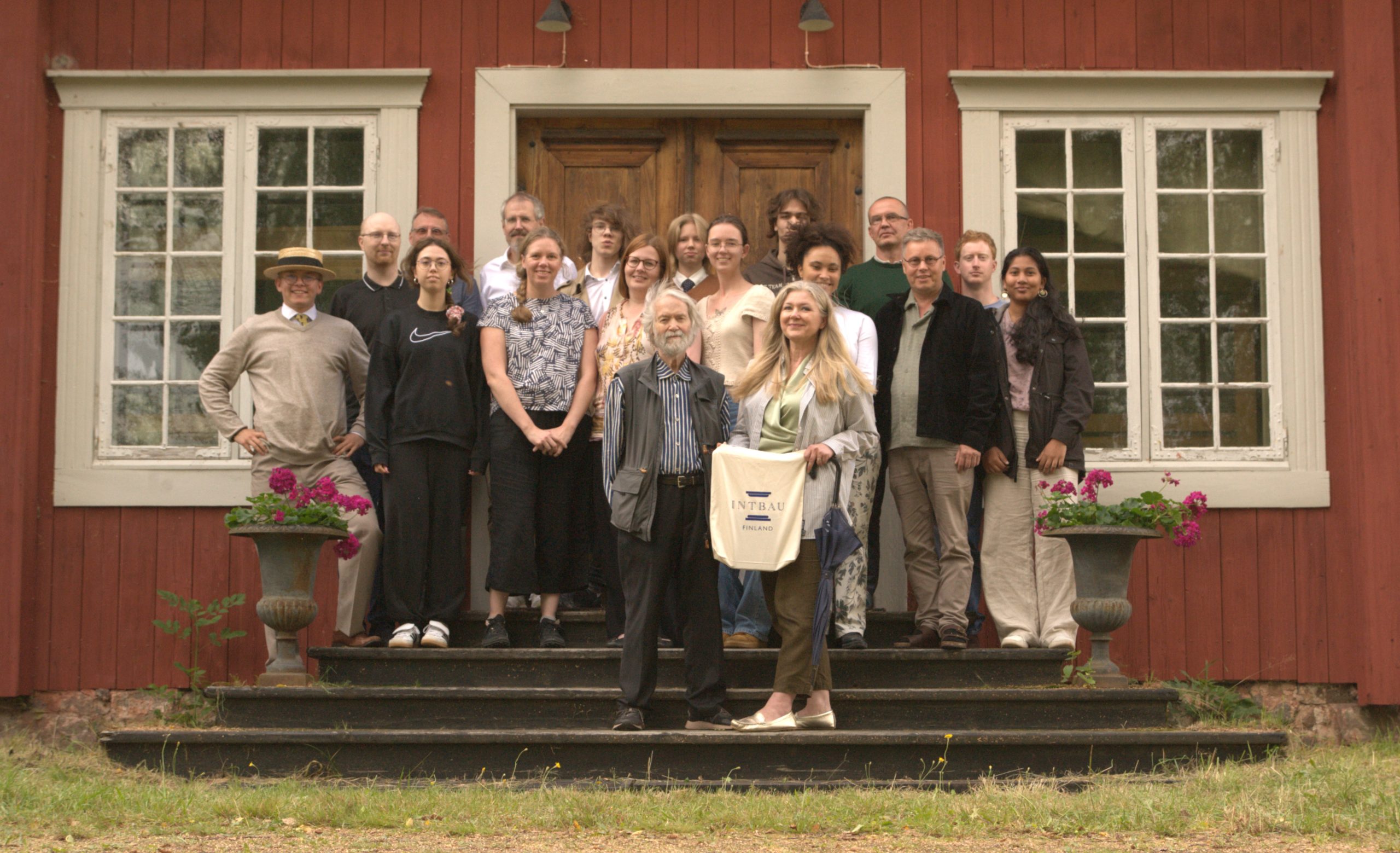
For example, in Finland we organised a summer school in 2025 bringing together international students to study traditional architecture and sustainable building practices in a historic setting.
These kinds of programmes are important because they connect theory with practice. They also build friendships and professional networks that last far beyond the course itself.
9. What advice would you offer to young women or emerging professionals interested in the field — architecture, urbanism, craftsmanship, or related disciplines?
My advice would be: stay curious and explore the field broadly.
Architecture and the built environment are inherently interdisciplinary. You can approach them through design, planning, craftsmanship, research, history, environmental psychology or community engagement.
Also, seek out networks. No one builds a career alone, and international communities like INTBAU can be incredibly supportive.
And perhaps most importantly: trust your own observations. If something about the built environment seems worth questioning or improving, it probably is.
10. Finally, what message would you like to share with women across the INTBAU network and the wider built environment community?
I would simply say: your voice matters.
The built environment shapes everyday life for everyone. It influences wellbeing, culture and the identity of places. Because of that, the field benefits enormously from a diversity of perspectives.
The growing presence of women across the INTBAU network — in leadership, research, craftsmanship and community initiatives — is already shaping the future of the field. I hope we continue supporting each other, learning from each other, and building environments that truly serve people.
About the INTBAU Council of Chapters
The International Council of Chapters (ICC) is one of INTBAU’s governing bodies, bringing together representatives from across the organisation’s global network of over 40 Chapters. Through the ICC, Chapters contribute to shaping the strategic direction of the Network, helping to establish shared principles and policies that guide INTBAU’s work internationally.
The Council also provides a forum for exchange between Chapters, supporting collaboration and the sharing of knowledge, experiences and initiatives that respond to local contexts while contributing to a broader global dialogue on traditional building, architecture and urbanism.