This blog post is part of the ArchitecTour series, chronicling the INTBAU Germany chapter’s architectural walks in search of classical architecture – both old and new. It is written by Michelle Sofge and Bart Urban.
INTBAU Germany made its way to the Hanseatic port city of Hamburg for its Architectour series. The two-day tour, led by architect Sebastian Horwitz, included walks around both a historic district and neighborhoods with examples of new traditional architecture. The tour began with a visit to Hamburg’s historic ‘Kontorhaus’ district, a commercial district built in the interwar period and which displays outstanding examples of early twentieth century brick expressionist architecture. The district, along with the neighboring ‘Speicherstadt’, was declared a World Heritage Site in 2015. Originally built as one of Europe’s first purely commercial districts, the area thankfully emerged largely unscathed from the Second World War and is today a symbol of Hamburg’s merchant and commercial past.
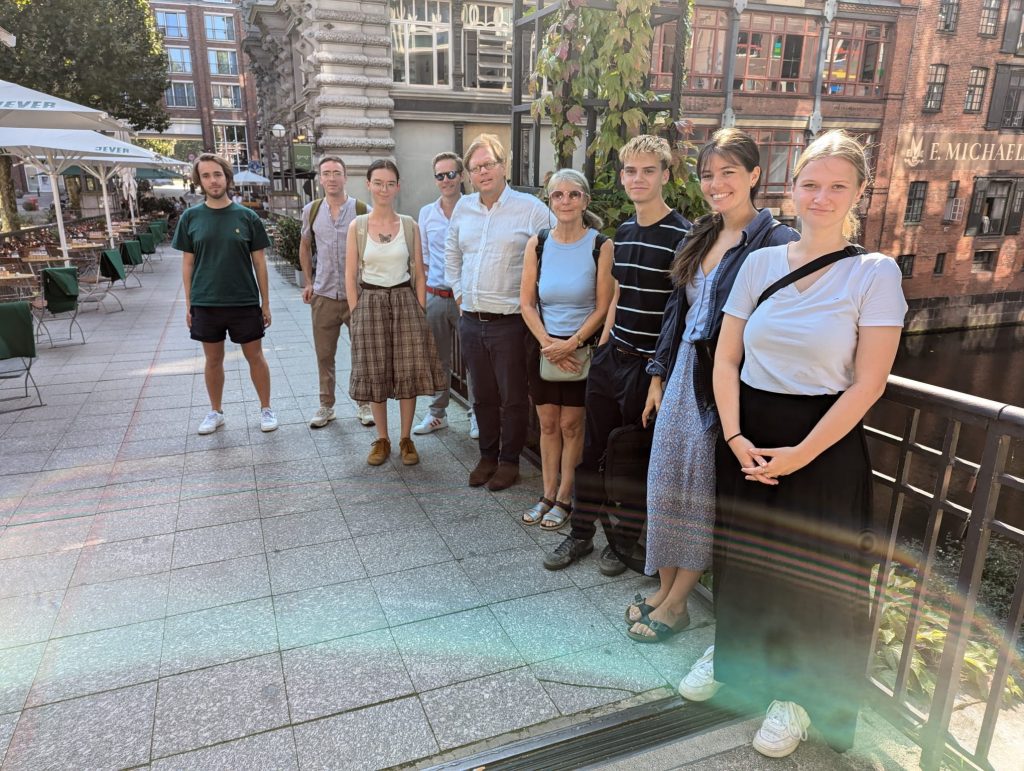
Tour participants enjoying one of the many bridges spanning a Hamburg canal. The city claims to have more bridges than Venice.
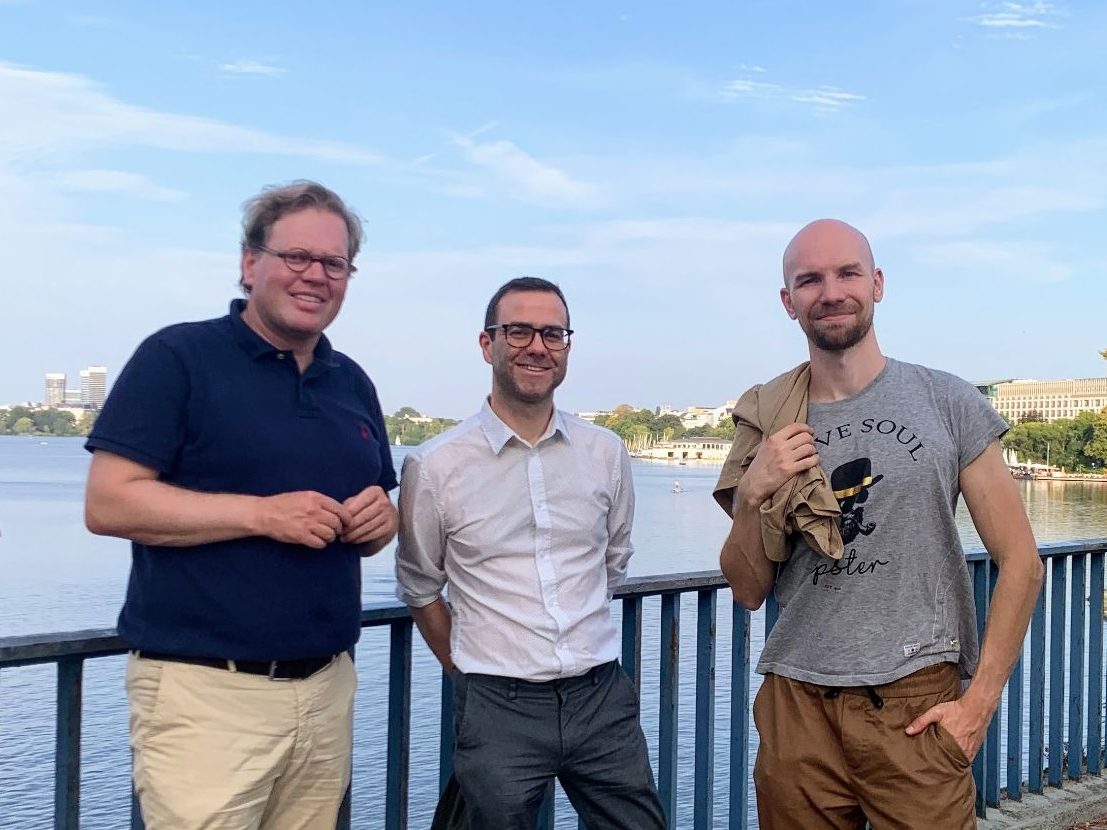
Sebastian Horwitz, Thomas Heiser and Bart Urban are part of the core INTBAU Germany team and led the tour through Hamburg.
A few of the tour participants were struck by the contrast between this early twentieth-century commercial district and their contemporary lifeless equivalents. We are all familiar with the boring, ugly and soulless office districts of today – cheaply-built glass boxes, executed to meet minimum standards and achieve maximum profits, with no regard for beauty, for craftsmanship or for the expression of local character and identity. Walking around the Kontorhaus District, in contrast, one has the distinct sense of being in a specific place, of being surrounded by buildings which were meant to express something – whether wealth or power or even a reference to a particular commodity or trade or part of the world.
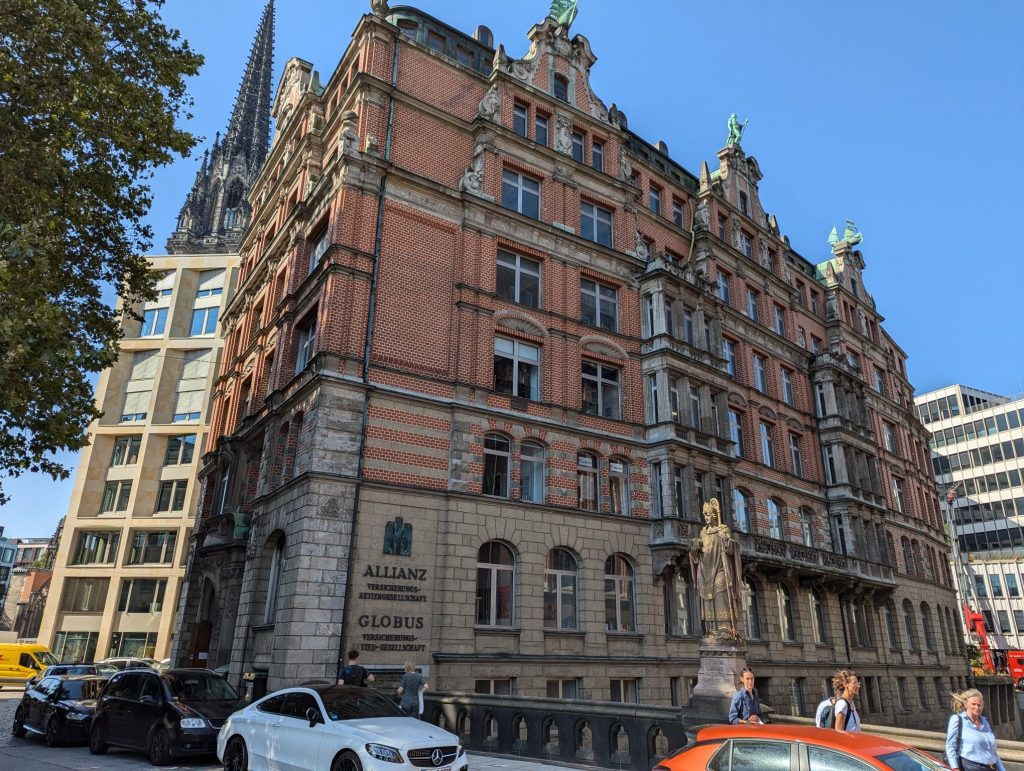
A view of the Globushof from the Trostbrücke
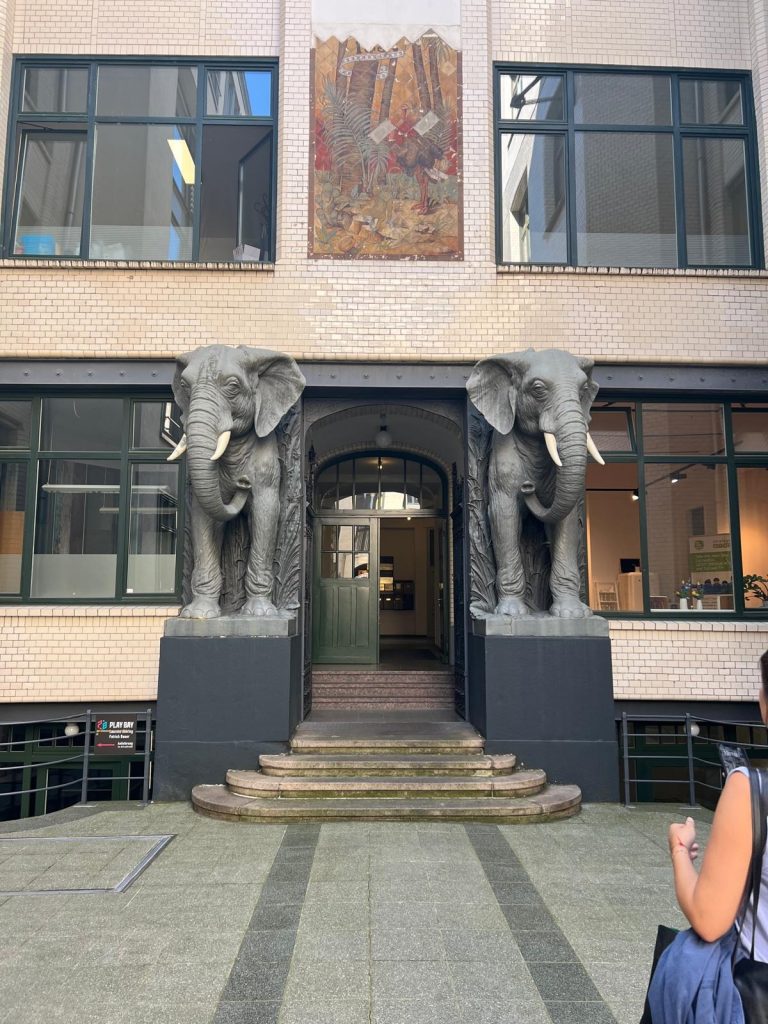
The Afrikahaus in the Kontorhäuser District
The district in this way offers a stark contrast to the lifeless, windswept and sterile office box districts with which we are all sadly too familiar today, boasting instead detailed, high-quality architecture which offers both visual interest and an expression of local identity. Tour participants explicitly noted the way in which the buildings of the Kontorhaus District, while certainly landmarks and iconic in their own right, are still rooted in Hamburg’s history and building traditions. Comparisons were made with the Spiegel and Bundesbank buildings, both of which fail to blend into the cityscape or their surroundings. The Chilehaus in particular was pointed to as evidence that beautiful, ornamental buildings can be built with relatively little cost and materials.
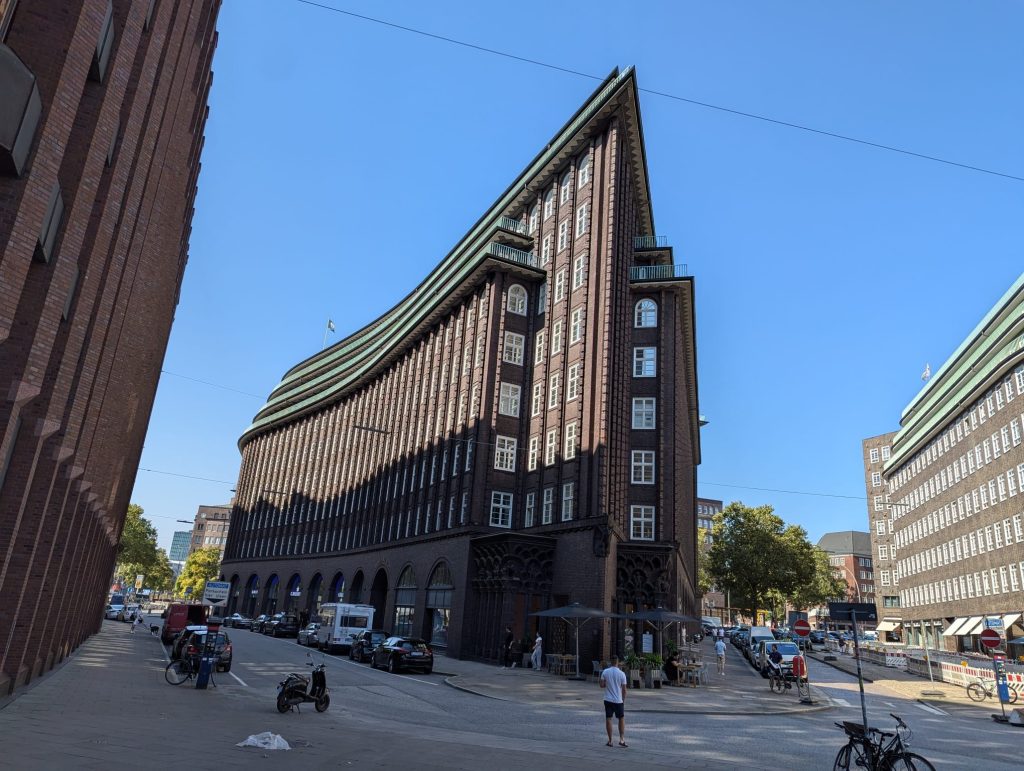
The famed Chilehaus in Hamburg’s Kontorhäuser District
Tour leader Sebastian Horwitz noted as well that unfortunately, one of the earliest and most important examples of a ‘Kontorhaus’ building, the Dovenhof, having survived the Second World War, was demolished in the 1960s to make way for the highway-like thoroughfare built in the postwar period and which cuts directly through the old city center. This thoroughfare, known as the ‘East-West Street’ and graced on both sides by faceless semi-high-rise buildings, demonstrates why Hamburg is sometimes referred to as the ‘Free and Demolition City’, an appellation which Hamburg can hopefully rid itself of in the future.
The walk around the Kontorhaus District was followed by a visit to the Hamburg Architecture Archive, where participants enjoyed an exclusive tour of the institution housing an invaluable collection related to Hamburg’s architectural history and urban development. Lilly Traxel, a young architecture student, was particularly impressed by the visit to the archive, noting that the documentation and information housed there was much more inspiring and comprehensive than what is available online – “much better than Pinterest!”, as she put it. These days, she pointed out, architects and designers are too quick to check online platforms for design inspiration, whereas the city archives offer a much richer, and better organized, source for designs.
The following day, tour participants gathered again for a walk around the Alster in search of new residential buildings built in classical or traditional style. The first stop was an imposing townhouse on Karlstraße 27, designed by Sebastian Treese Architects. The three-storey townhouse, with its mansard roof, lattice windows and gables, was designed to blend in to the historic neighborhood and to be reminiscent of a typical Hamburg villa. This townhouse, while visually striking, does not seek to call attention to itself, but rather to fit in harmoniously with its surroundings. While certainly eye-catching, it is also entirely congruent with the surrounding buildings and neighborhood, proving that it is possible to build new traditional buildings that fit in seamlessly into existing neighborhoods.
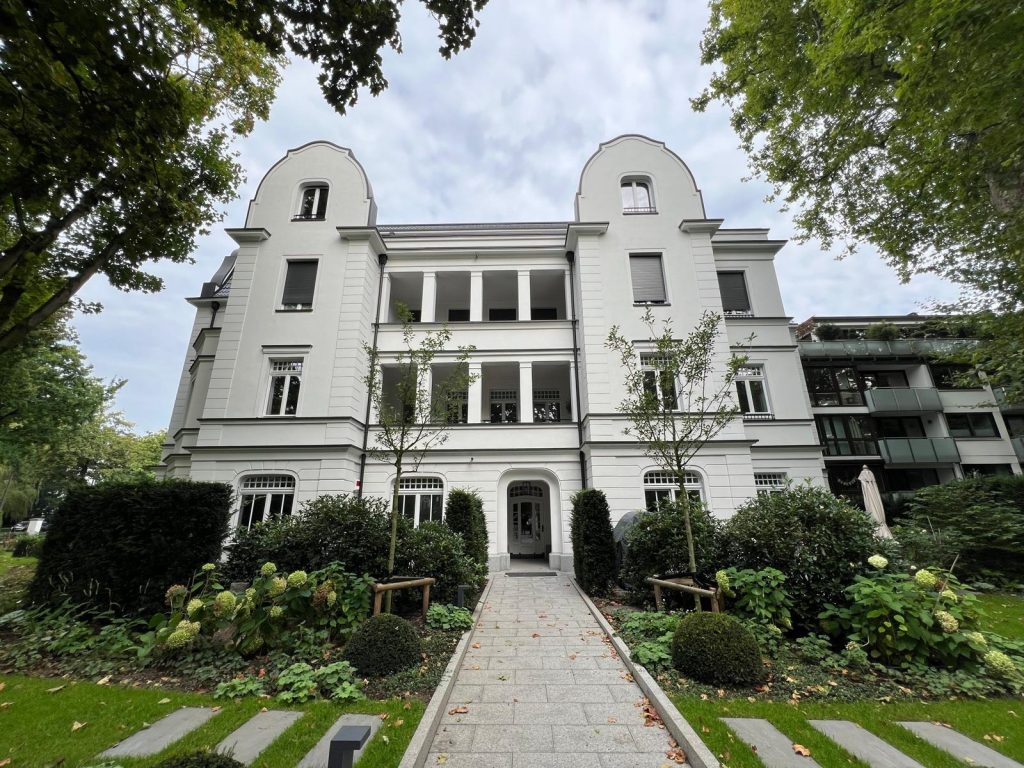
Karlstraße 27
The tour then meandered along the appropriately named Bellevue, lined with stately riverfront residences.
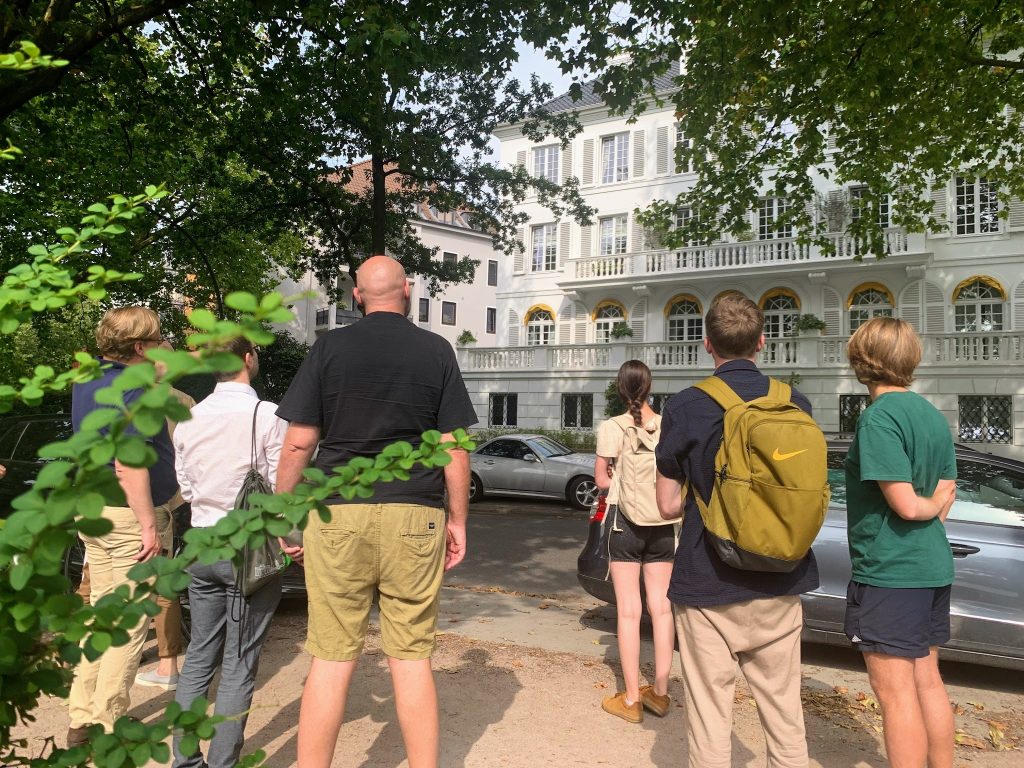
Admiring the beautiful view
Next ArchitecTour in Hamburg: Harvestehude. Exploring good examples of mixed-used urban areas, Wednesday, 20 May 2026 (5.30 PM)
Please register for the event: info@intbau-germany.org
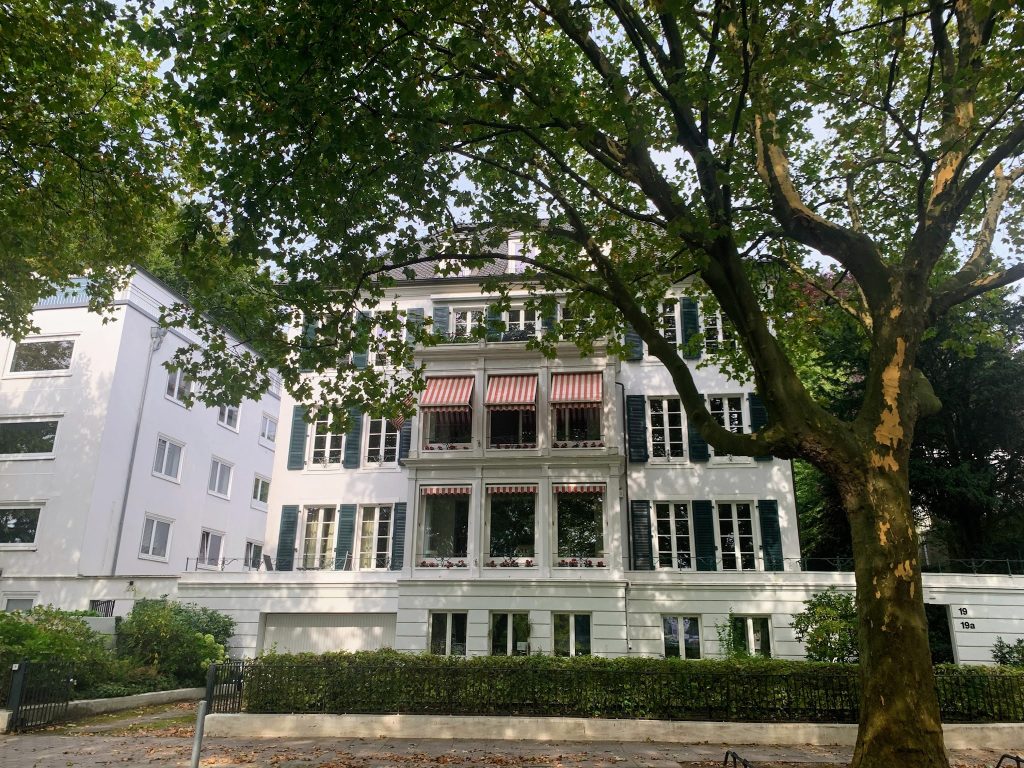
Stately buildings along the walk
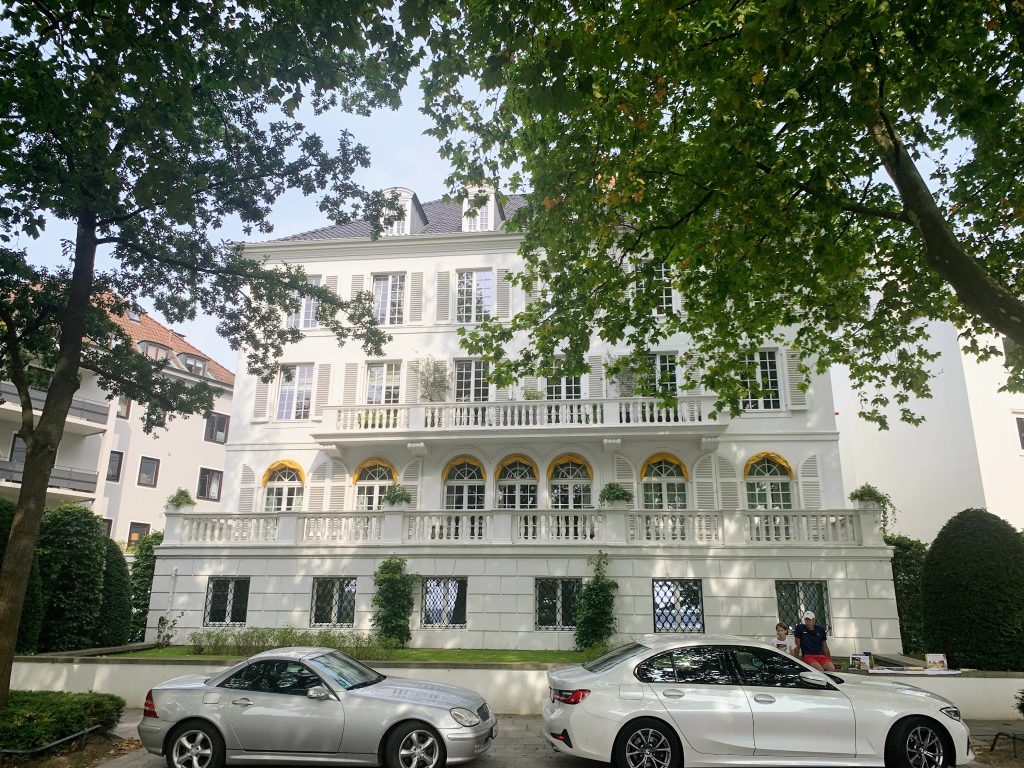
Enjoying the terrace from afar
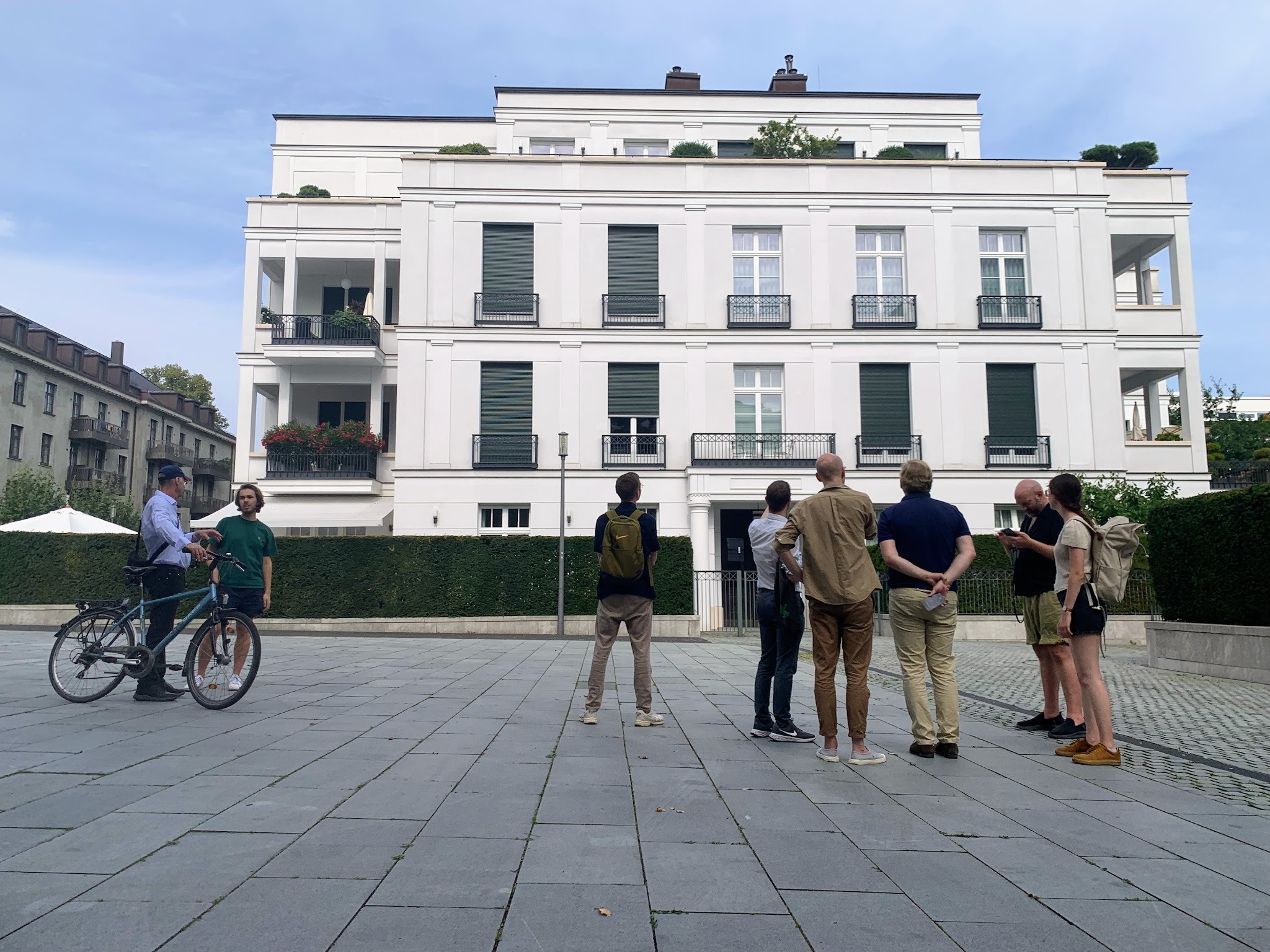
The tour then made its way to the new buildings of the Sophienterrassen by Kahlfeldt Architects. Some members expressed reservations regarding the seeming exclusivity and impenetrability of this area, noting the absence of street-facing structures and of lively street life. The visit in this way ignited an interesting discussion among members focused on how we can ensure that classical design and architectural beauty are available to wider segments of the public, and do not remain rarified, luxury commodities available only to the lucky few.
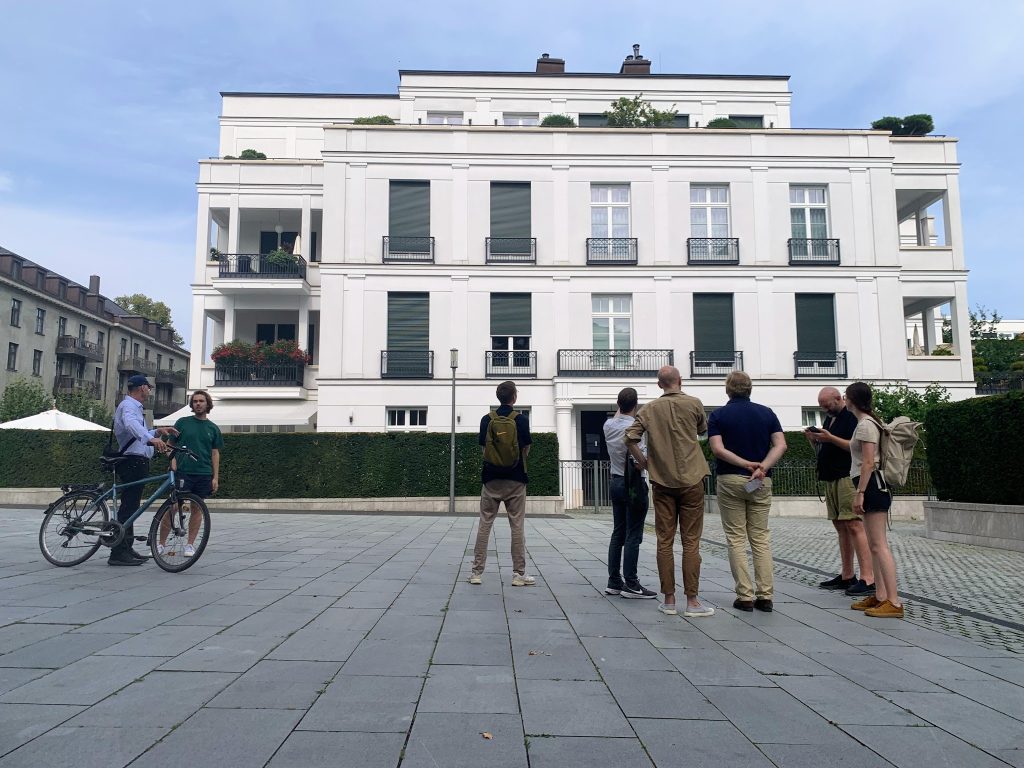
Discussing a building in the Sophienterrassen
The tour wrapped up with a convivial lunch in a courtyard in the charming Pöseldorf neighborhood, where tour participants discussed both their impressions of the visits as well as ideas for moving the field forward. The following day, some participants in need of an additional dose of architectural beauty took it upon themselves to enjoy additional tours and exhibitions on what happened to be Open Monument Day.
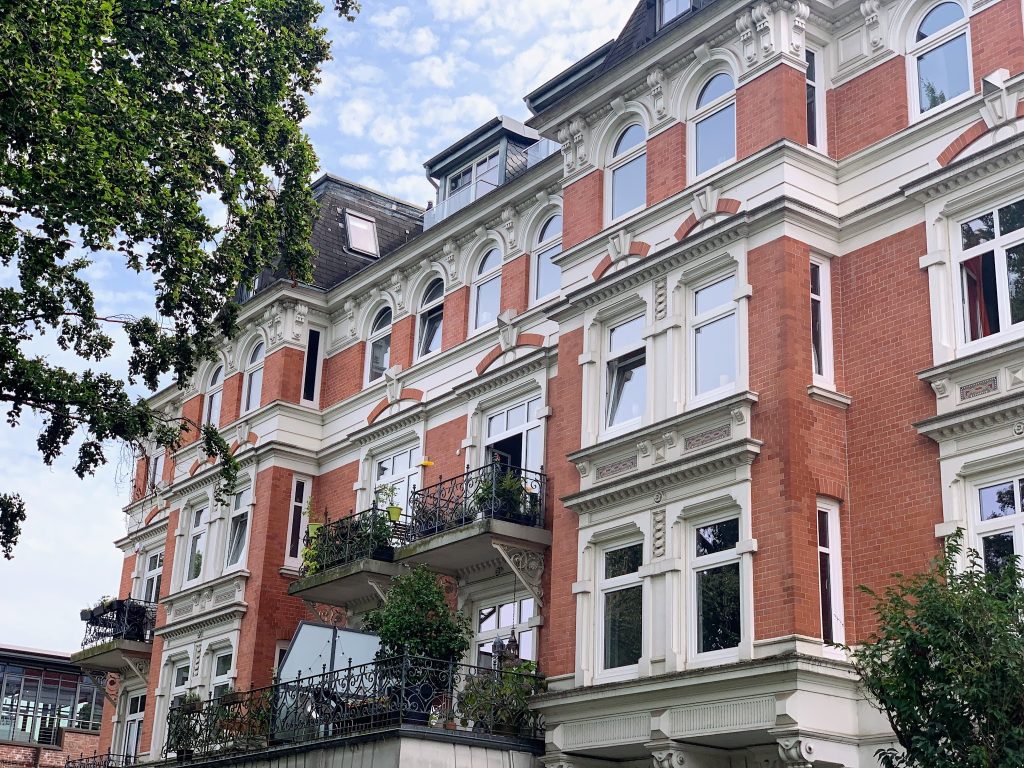
Tour participants were particularly charmed by the Pöseldorf neighborhood
Additional ArchitecTours are intended for parts of Berlin, Munich, Düsseldorf, Leipzig and other areas of Hamburg. We are also open to suggestions. For anyone interested, subscribe to the INTBAU Germany newsletter or email us at: intbau.germany@gmail.com.